

OUR MISSION
To Normalize Atheism by Advancing a Truth-Grounded Secular Ethic and Building Durable Secular Communities and Institutions
Who We Are
If Atheism is going to become socially normal it has to become known for cultivating people with dependable characters and growing welcoming communities, not just arguing online.

If we don't build a meaningful infrastructure for Atheists then most people will keep leaving one faith-based community only to join another, because the social costs of a lonely Atheism life are too high.
Many legacy Atheist organizations have lost their way, becoming mirred in unnecessary culture war crusades and embracing contradictory political idealogies.

We must create a new culture where Atheists are known as trustworthy neighbors, reliable friends and steadfast citizens because our lives reflect such deeds. A culture built by rational creeds without contradictions.

Get Involved
You're awesome. Let's talk.

reddit Community

Facebook

Twitter

TikTok
Get The Books
Educate yourself on the principles the Virtuous Atheism Project operates by and then share this knowledge with others to grow a new wave of Atheism for the 21st century.
Profits from the revenue of these books will help establish an organization to provide support to local communities.
Help us build a golden era for Atheism to flourish.
Virtuous Atheism
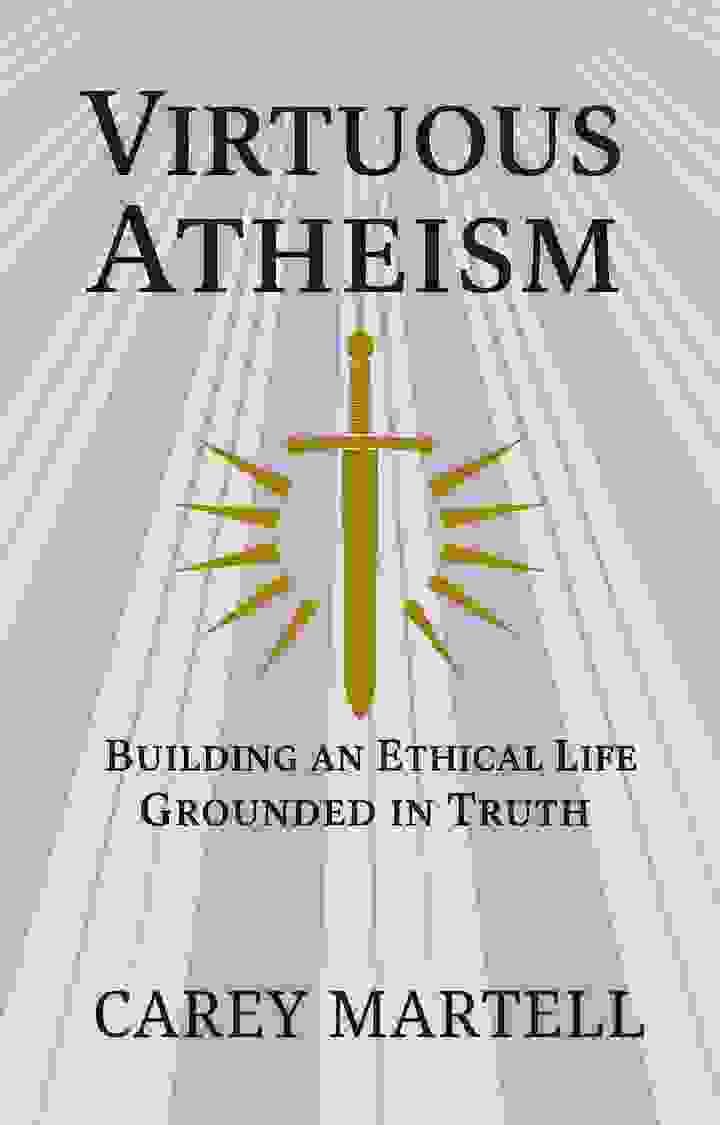
Virtuous Atheism: Building an Ethical Life Grounded in Truth argues that real Atheism is not merely a “lack of belief in gods” but also requires active disbelief grounded in a moral refusal to lie to yourself or others. An Atheist is someone who says: “I should not believe anything is real unless it can be shown to be true by reason and evidence—and it would be wrong to pretend otherwise for comfort, tradition or social approval.”
Starting with Pierre Bayle’s early discussion of the “virtuous athée” and correcting how later writers distorted his terms, Carey Martell traces how modern Atheism emerged as a science-centric, naturalistic worldview that rejects all superstition.
This book is a guide for Atheists who want to live consistently by the standards they already use to reject superstitious religion: to proportion belief to evidence, to refuse comforting lies and to build a life—and a society—where Truth triumphs over superstition, conformity and fear.
Common Humanity
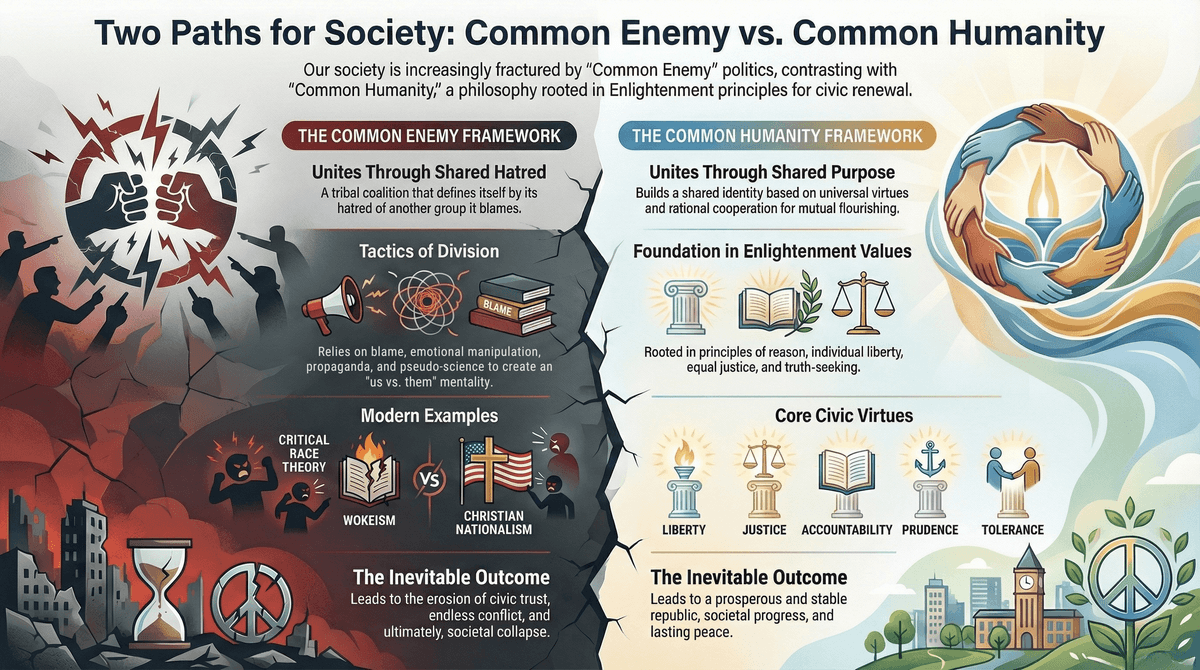
Common Humanity: The Path to a Free and Prosperous Republic, Ending Common Enemy Politics with Enlightenment Citizenship presents a new philosophy for the revitalization of the American republic through a renewed dedication to civic virtue and reason in public life.
Author Carey Martell examines the Enlightenment roots of Ordered Liberty, showing how the United States originally attained prosperity through the rugged independence of its citizens and the free exchange of ideas.
Critiquing the polarized division created by Common Enemy political movements, Common Humanity offers an alternative way forward, restoring the nation’s founding principles with a culture of integrity, duty and voluntary cooperation among citizens of all backgrounds.
Book of Chivalric Humanism, Second Edition
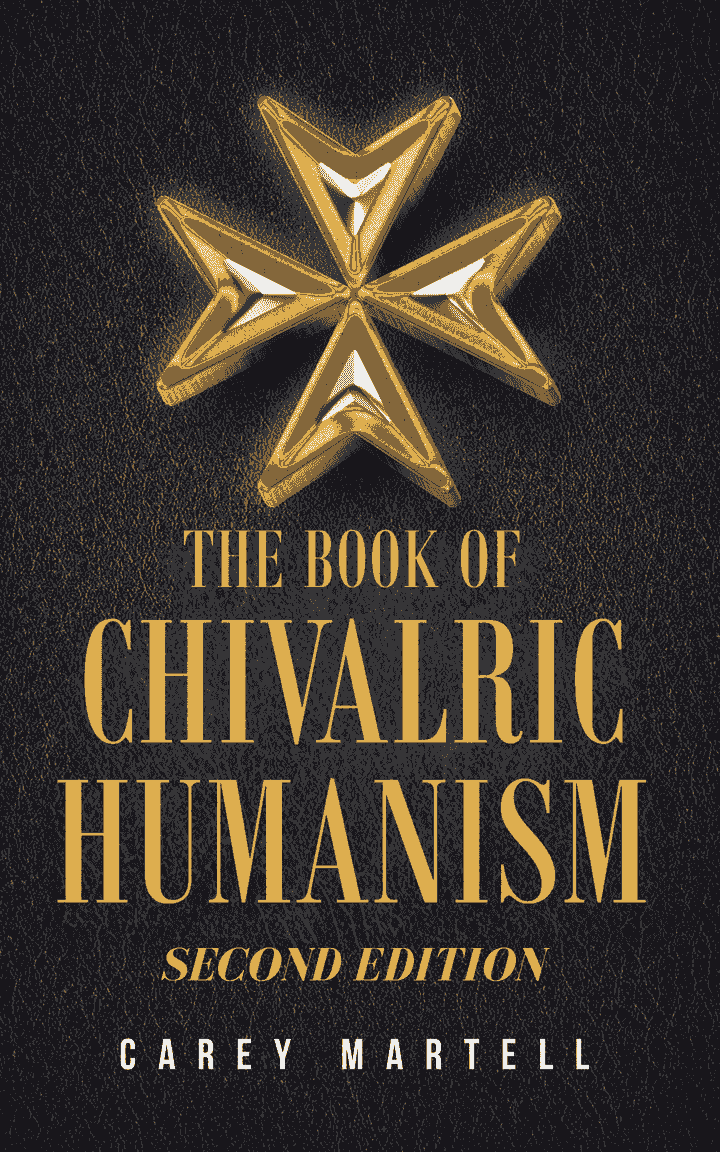
The Book of Chivalric Humanism is a collection of essays and observations that contains the core principles of Chivalric Humanism and is the foundation of its philosophy and dogma. This is a moral framework for Atheists seeking useful practical advice for how to live a virtuous and purpose driven life.
Chivalric Humanism is a branch of naturalism philosophy; that is, it is rooted in the belief that only natural forces operate in the world. Chivalric Humanism is characterized by its emphasis on virtue and excellence while also stressing that its adherents become champions for the rights of others in order to serve the common good.
What Chivalric Humanism seeks to do is create a new kind of chivalry for the modern age which promotes the sense of civic duty that is greatly lacking in other varieties of humanism philosophy books. It is through the purpose of civic duty that old and new chivalry can be linked together.

Encyclopedia of Atheism, Volume I and II
Atheism is more than just a “lack of belief.” It is a long, hard-won intellectual tradition born from science, philosophy and the refusal to bow to superstitious dogma.
Encyclopedia of Atheism is written to give you that tradition in one place. Instead of scattered quotes and internet arguments, you get clear, cross-referenced entries that explain how Atheist ideas developed, who advanced them and which claims history actually supports. From ancient critics of religion to Enlightenment Deists and modern secular thinkers, this work traces how argument after argument against gods, ghosts and magical thinking was built, tested and refined over centuries.
This Encyclopedia treats Atheism as a science-centered, naturalistic worldview. Entries focus on evidence, logic and historical context, not slogans. You will find biographies of forgotten pioneers, summaries of major books and debates, explanations of key concepts in philosophy and science, and honest discussions of where Atheist thinkers have disagreed with one another. Every entry is written in plain language so that a motivated reader, student or activist can follow the ideas without needing a degree.
Click Here to Buy the Books on Amazon!
How to Convince an Atheist Abortion is Wrong
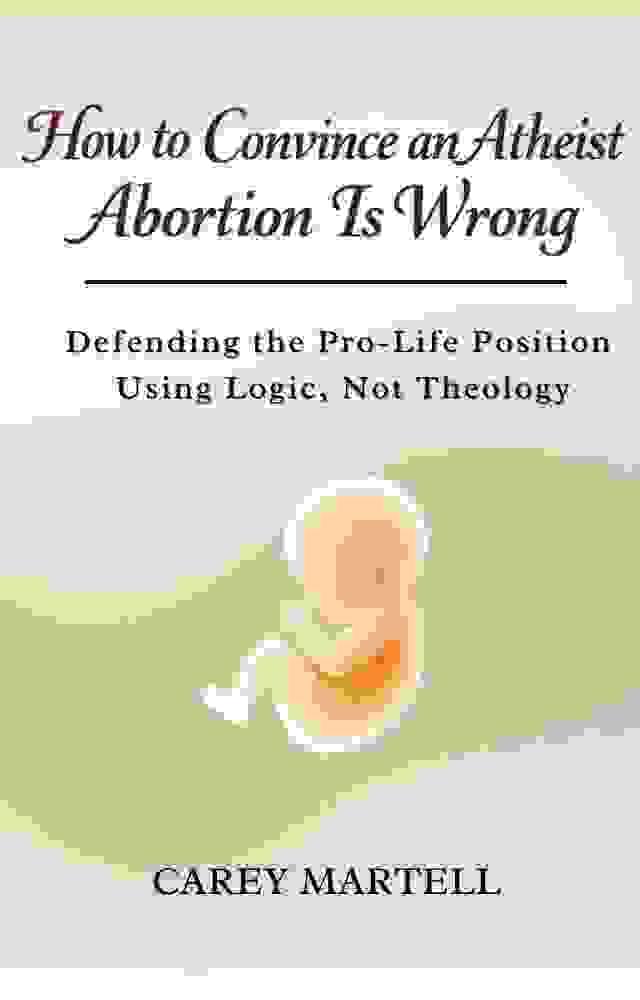
Can reason alone prove that abortion is unjust?
This bold and uncompromising book answers: Yes.
How to Convince an Atheist Abortion Is Wrong: Defending the Pro-Life Position Using Logic, Not Theology is the definitive guide for Pro-Life advocates who want to engage in meaningful, rational discussions about abortion—without relying on religion. Designed specifically for those asking questions like “Can an Atheist be pro-life?” or “How do I argue against abortion without using God?”, this book arms readers with secular arguments grounded in science and ethics against abortion.
It is a karate chop to the neck of the Postmodern Moral Relativism at the heart of pro-abortion rhetoric that subverted the concept of universal and fundamental human rights as developed by the Enlightenment Classical Liberalism behind the pen of the US Constitution and the Bill of Rights.
Video Summary of Common Humanity
Take a look and learn more!
What is Atheism?
Just so we're clear on definitions. An Atheist is a person who actively rejects the claims made by theists of gods existing, because the Atheist does not believe these claims have sufficient evidence to support them. The video presentation explains this in detail.
FAQs
What is the mission of the Virtuous Atheism Project?
To normalize Atheism by advancing a Truth-grounded secular ethic and building durable secular communities and institutions.
It is designed to kickstart a new cultural movement of Atheism similar to the historical Ethical Culture movement of the early 19th century, which unfortunately became engulfed by a Eugenics-based form of "Secular Humanism" developed by Julian Huxley, the first president of International Humanist and Ethical Union, which is presently known as Humanists International (HI). HI has absorbed nearly all Ethical Culture chapters under its worldwide umbrella.
The Virtuous Atheism Project is critical of HI's brand of "Secular Humanism" which promotes several pseudo-scientific ideas such as Julian Huxley's eugenics-based "population control" theories, Malthusianism ("overpopulation" alarmism) and Postmodern relativist frameworks that claim there is no objective Truth, which is contrary to Empiricism (modern Science).
The Virtuous Atheism Project seeks to roll the clock back, so to speak, to the noble origins of a virtue based secular Humanism grounded in legitimate Scientific inquiry with the goal of building durable secular communities and institutions as the Ethical Culture movement originally did until it lost its way. The first phase of this Project is to create a common language with foundational principles for the movement, which is the purpose of the books written by Project founder Carey Martell. The next phase will be to build local communities and new organizations such as advocacy groups, libraries, schools and other institutions centered around this foundation. We need your help to achieve this.
Is this a political organization?
The Virtuous Atheism Project is not a partisan political organization nor is it a political advocacy group. The book Common Humanity is a work of political philosophy favoring a return to the classical Liberal values of the Enlightenment that are foundational to the governmental structure of Constitutional democratic republics such as the United States. This is something that Americans on both the Right and the Left should be able to agree on. Common Humanity criticizes political polarization as an attribute of Common Enemy groups and suggests people should form their political identity based in what values they cherish, not by what values they are opposed to. Atheists seeking a political organization to support are encouraged to check out Atheists for Liberty, a non-partisan political advocacy group for church and state seperation whose mission is aligned with the values of Common Humanity.
Why does the Book of Chivalric Humanism have a maltese cross on the cover? Is this a Christian dogwhistle?
No. Crosses are not an exclusively Christian religious symbol, it is common in many religions. The maltese cross is a symbol used historically by the Knights Hospitaller and it has symbolic meaning as a kind of ethical compass star; the four arms represented the classic four cardinal virtues and the eight points on each arm represented the eight obligations of a knight such as to truth, justice and mercy. Due to its association with a historical knightly order it has often been used in popular fictional media depictions of knights such as comics and videogames even when the media has nothing to do with Christianity. The concept of becoming 'knightly' in Chivalric Humanism is largely inspired by this portrayal of the knight archetype in popular media, which much like Christmas and Santa Claus, are largely secular ideas in today's culture.
The Chivalric Humanism symbol is inspired by this cultural depiction. Each arm represents one of the Four Positive Principles of Truth, Love, Wisdom and Courage, and the eight points represent the Eight Noble Virtues of Loyalty, Altruism, Valor, Respect, Hope, Humility, Integrity, and Duty. These are secular values that are universal to all cultures. Atheists, too, are capable of virtuous behavior and the use of this symbol on the cover of the Book of Chivalric Humanism is meant to reflect that this is a new kind of chivalry for a modern secular age. We are showing that we, too, can be knights of the world.
Is this related to existing Pro-Life organizations? Why are you Pro-Life on Abortion?
The Virtuous Atheism Project is neither a creation or funded by any other organization. It is also not expressly a Pro-Life organization, either. It simply adopts a stance on the issue of Abortion because it is impossible to avoid the issue whenever discussing ethics, as it is one of the central issues of debate about ethics in the world today. Christian apologists who criticize Atheist ethics always bring the topic of abortion up, so it is better to confront the issue head on than try to hide from it
The reasoning used to arrive at a Pro-Life position on the issue of abortion is unrelated to the faith-based claims made by other organizations; it is the organic conclusion of applying the same standards Atheists' use to scrutinze faith-based claims to the topic of abortion.
Pro-Choice rhetoric is commonly based in utilitarian arguments. The Virtuous Atheism Project rejects utilitarian philosophy because merely because something is useful does not automatically make it ethical, and emotions like happiness, pleasure, discomfort and suffering are too arbitrary to base a solid ethical framework upon. They are useful feedback signals but they need to be tempered with good reasoning to be useful, because these are instinctive emotions. Our instincts were not honed for the kind of highly technical and complex civilizations we live in today. We need logic to help us make sense of our emotions in the proper context of the situations.
Pro-Choice rhetoric is also based in Postmodern relativist frameworks that attempt to redefine 'personhood' to exclude the unborn on the basis of functional critiera such as 'age' and 'intelligence', which is contradictory to the concept of universal human rights, which expressly denies the use of such functional crtieria to deny these rights to members of the human species. How can rights truly be universal to all humans if some groups of humans can be excluded from them? The unborn are not members of a different species; they are members of the human species, in the earliest stages of the human life cycle. This is a scientifically established fact that no semantical argument can ignore. Species membership is the only stable definition for what should constitute a person, because it is the only definition based on an objective fact that no one can rationally disagree with; it's impossible to claim someone who is genetically a human is not a human.
Furthermore the history of Pro-Choice abortion advocacy in Atheist organizations is based in the history of eugenics, people such as Julian Huxley, the first president of Humanists International, who justified the use of abortion as a means of population control against those he deemed "unfit" based on factors such as economic status and intelligence. Eugenics is a pseudo-science that has caused tremendous injustice in the world and continuing to champion pseudo-scientific ideas to justify abortion (including Neo-Malthusianism in the case where climate change alarmism advocacy is used to justify abortion as a means of population control) is inherently pseudo-scientific. Pseudo-science is not aligned with Atheism.
The history of eugenics and how it has framed the Pro-Choice abortion position of Atheist organizations such as American Humanist Association and Humanists International is detailed in the book How to Convince an Atheist Abortion is Wrong, as well as the full arguments laid out for why it is contradictory for an Atheist to claim science is the best method to determine Truth and that moral decisions should be aligned with Truth yet support the practice of abortion. This is not a conclusion arrived at haphazardly but instead because it is the logical conclusion of applying the same standards used to reject a belief in deities to other ethical issues. It is simply impossible to justify abortion while simultanously professing a belief in universal human rights to life and dignity, and moral virtues such as Truth and Justice.
It is also important to recognize that the main point of differentation between Atheists and Christian nationalist groups is the issue of abortion. Jerry Falwell's Moral Majority and all groups descending from it, such as the Heritage Foundation, have built ALL of their political power based on the singular issue of abortion. Christian nationalist groups have had a monopoly on Pro-life rhetoric which has empowered them, allowing them to acquire billions in funding. Many people understand instinctively that something is unethical about abortion used as a means of population control, even if they cannot rationally articulate why, Therefore if Atheists have a better, more coherent argument against abortion there is no longer a need for people to turn exclusively to Christian fundementalist groups for Pro-Life messaging and provide funding to them. There is a vast un-tapped group of people who are on the fence about leaving behind faith-based religions such as Christianity but find they cannot do so because the Atheist alternatives support practices they believe to be immoral. For Atheism to become normalized it must be able to appeal to this demographic of fence-sitters and it cannot do that using a eugenics-based Pro-Abortion platform that engages in semantical arguments. This is one of the key reasons why Atheism has not become more commonplace. By not running away from the issue of Abortion merely because it is controversial and difficult, The Virtuous Atheism Project signals to these people that there is a place for them in the ranks of Atheism and they do not need to continue to support Christian fundementalist groups for this issue.
Got a question? Want to get involved?
Fill out the form below and we'll get back to you!
© 2026


